How to start UPSC preparation without wasting your first six months
Most aspirants spend their first six months collecting sources and switching strategies. Here's what to actually do in month one — and what to skip entirely.
Koach Team19 August 2026
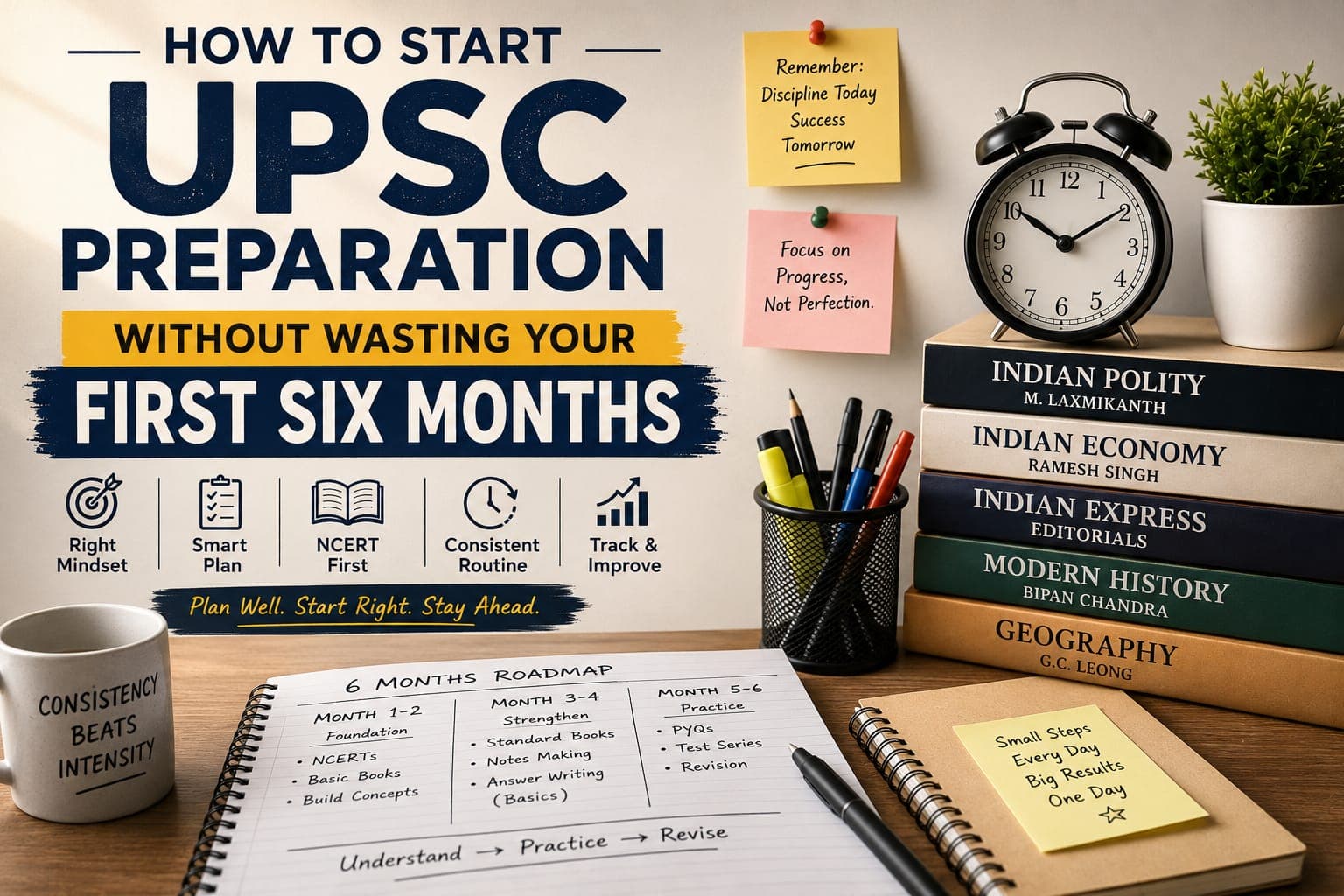
The first six months are where most aspirants lose the most time
Not to a lack of effort — to a lack of direction. You'll meet aspirants two years into their prep who still don't have a settled routine, because they spent month one downloading twelve different sources, month two switching to a "better" strategy they saw online, and month three starting over with a new time table.
None of that is really preparation. It's motion without progress. Here's what the first month should actually look like.
Week 1: Read the syllabus like it's the actual exam paper
Most aspirants skim the UPSC syllabus once and never open it again. That's a mistake — the syllabus is the exam. Every question that has ever been asked traces back to a line in it.
Print it. Go topic by topic. For each one, ask a single question: have I studied this at all, ever? Mark it "new," "vague," or "solid." This alone will tell you more about where you stand than any mock test at this stage.
Weeks 2-4: One source per subject, not five
This is where most first months go wrong. The instinct is to collect — one YouTube channel for Polity, another for Economy, a Telegram channel for current affairs, three different books for History. Every new source resets the clock, because you spend time comparing instead of learning.
Pick one standard source per subject (NCERTs are the obvious starting point for a reason — they're written to build a foundation, not to impress). Finish it before you touch anything else for that subject.
The aspirants who clear Prelims on their first attempt are rarely the ones who read the most. They're the ones who read the same core material enough times that it stopped needing re-reading.
A realistic week, not an aspirational one
Aspirants routinely build 14-hour daily schedules in month one and abandon them by week two. A schedule you can't sustain isn't a schedule — it's a plan to feel guilty. Something closer to this actually survives contact with real life:
| Block | Focus |
|---|---|
| Morning | One static subject (Polity, History, Geography — rotate weekly) |
| Afternoon | Current affairs — newspaper or a daily digest, not both |
| Evening | Revise what you read that morning, not new material |
Revision beats coverage in month one. You will forget almost everything you read once, and almost nothing you read three times.
What to skip entirely in the first month
- Mock tests. You don't have enough syllabus covered yet for a mock score to mean anything. It'll just be discouraging.
- Answer writing practice for Mains, unless you're already comfortable with Prelims-level basics. Build the base first.
- Optional subject selection anxiety. You have time. Don't let this decision block actual studying.
The only goal of month one
Not coverage. Not mock scores. Just this: by the end of it, you should have a routine you can actually repeat in month two without redesigning it from scratch. That's the whole win. Everything else compounds from there.