Climate Change Won't Hurt Everyone Equally — And That Should Worry Us
Climate change won't affect every nation equally. Explore why India faces greater risks while some regions of the US may find short-term advantages.
Koach Team7 September 2026
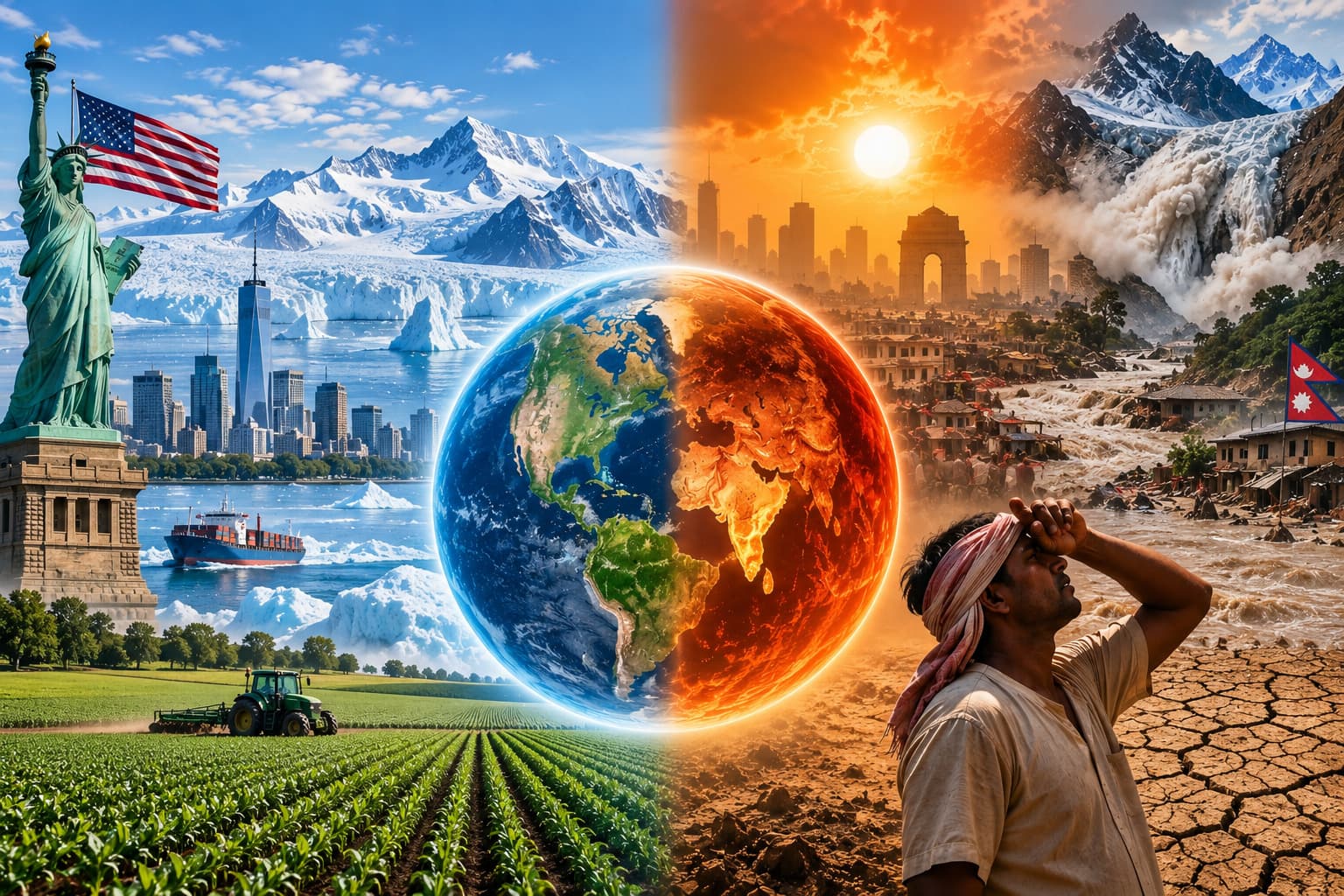
For years, the message on climate change has been simple: it's bad for everyone, everywhere. But that framing hides an uncomfortable truth. Climate change will not treat every country the same way. Some nations — wealthier, colder, less densely populated — may find pockets of short-term advantage. Others, like India, are already being pushed toward the edge.
This isn't a story about winners and losers in a moral sense. It's a story about who has the resources to adapt, and who doesn't.
A Warmer World, Selectively Kind to America
The United States spans a continent, from subtropical Florida to Arctic Alaska. That geographic range means climate change won't hit the country uniformly — and in its colder northern regions, warming could bring real, if temporary, benefits.
Growing seasons may lengthen. Land once too cold for certain crops could become newly viable. None of this cancels out the droughts, wildfires, and extreme weather already reshaping American agriculture — but it does give the U.S. something India simply doesn't have: room to shift.
A country this large can move production around as conditions change. India, geographically constrained and far more densely farmed, cannot.
The Arctic: Melting Ice, Rising Opportunity
Nowhere is the irony sharper than in the Arctic. As sea ice retreats, new shipping lanes are opening for longer stretches of the year, cutting the distance between major markets. Valuable resources once locked under ice are becoming more accessible.
Countries with Arctic territory — the United States among them — stand to gain strategically and economically from a warming pole.
The same planetary process destabilizing life for hundreds of millions of people in South Asia is, for a handful of northern powers, cracking open a new frontier.
Meanwhile, in India: Survival, Not Opportunity
India's experience of climate change looks nothing like this.
Heat that kills. India's summers are already brutal; a few additional degrees isn't a matter of comfort. It means deadlier heat waves, outdoor work becoming physically dangerous, spiking electricity demand, water shortages, and hospitals under strain. For the tens of millions of Indians working construction, farming, and delivery jobs under direct sun, extreme heat doesn't just cause discomfort — it threatens their livelihoods. A wealthy household can run an air conditioner. A laborer standing outside for ten hours has no such option.